Still Enough to Hear It
For most of my life, Memorial Day has meant picnics and the welcome relief of an extra day away from work. A day off dressed in red, white, and blue — noisy with sizzling burgers, parades, and fireworks — that I’ve enjoyed without pausing to ask who had paid for it.
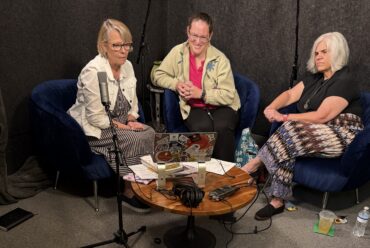
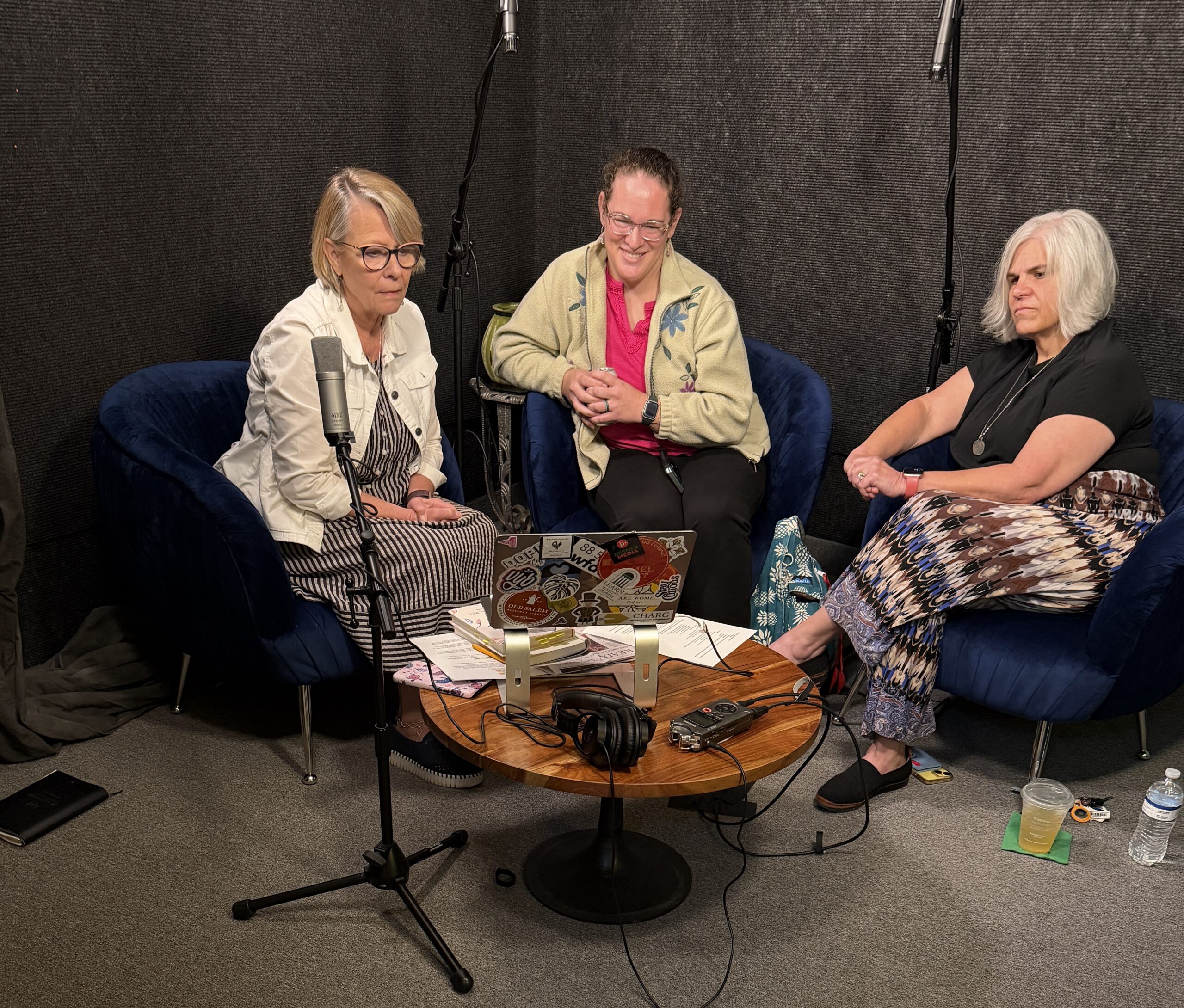
This year, a few things have conspired to change that. A few weeks ago, I interviewed Laura Elliott for the Wake Women podcast. Laura is an accomplished, 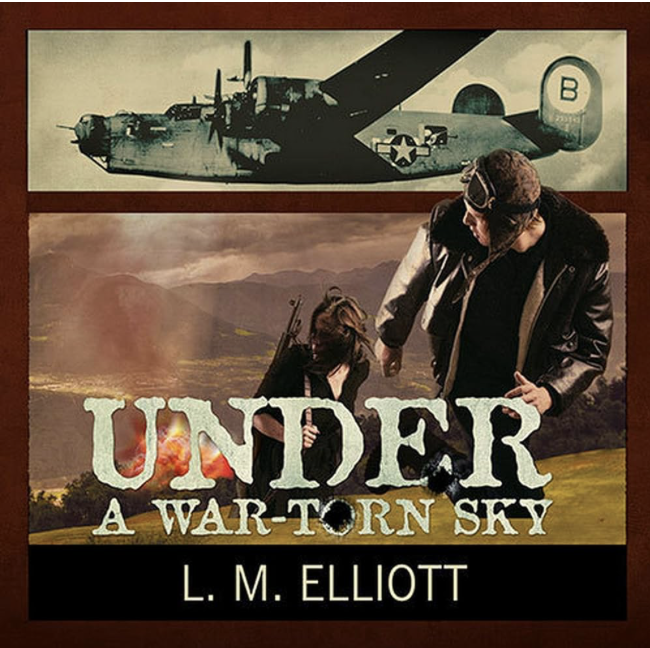 award-winning author of young adult novels, and her first book, Under a War-Torn Sky, is a fictionalized account of her own father’s experiences during World War II — of being shot down behind enemy lines and saved by ordinary French civilians working with the Resistance. Laura knows, precisely and personally, that but for a small group of brave French teenagers, she might not exist.
Most of us are not so acutely aware of what we owe. We’ve seen the grainy photographs and heard scraps of stories at holiday tables of our family members who fought in the Great Wars. But how often do we sit and listen to the full weight of what those men and women endured?
I have been mulling over that question as I’ve been reading the letters of my great-uncle, Dr. Charles Emerson Tribble.
Uncle Charlie was a surgeon stationed in the Pacific aboard the USS Solace, a hospital ship that worked the waters near Iwo Jima in the final years of the war. He was a gifted doctor, but he was also, as these letters reveal, a gifted writer. The letters he wrote to his wife, Ann, were careful and measured, presumably sparing her from the worst of what he saw. But the letters he wrote to his brother, Harold — my other great-uncle — were raw, precise, and almost unbearable to read.
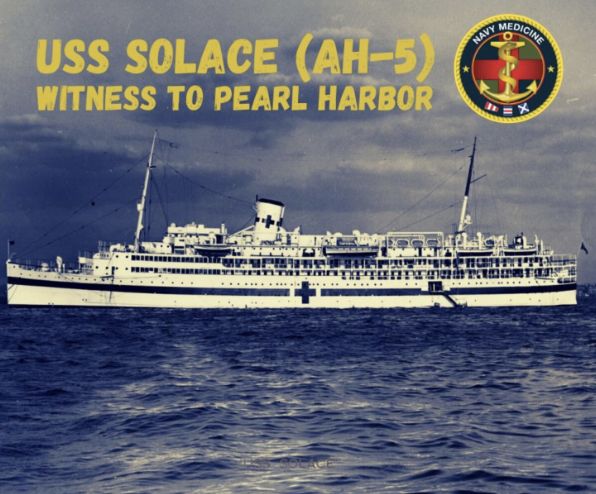
He wrote to his brother Harold of having a “grandstand seat” on deck with field glasses as the battle of Iwo Jima unfolded — until a shell exploded a hundred feet away and sent him running below. From the deck, he described the sounds of the battle as:
“a giant opera … the great belching growl of the battleships far at sea throwing their missiles onto the island with deep crescendos of arrumrrmps. The sharp, ugly barks of the sixes and fives close to shore, the steady, rhythmic beat of the forties, pum! pum! pum!–almost in foxtrot time.”
And then the Am Tracks came. He wrote of watching the amphibious units ferry the wounded to the ship:
“All day long the Am tracks scurry down the hill and dipped deep into the water and swam with great sheets of water kicked in their wakes out to our gang planks and loading cranes bringing horribly mutilated bodies, dumping them with signs of relief – as if they were thus relieved of the responsibility of these poor lads, and then churning on back to climb again the black silt of the beach.”
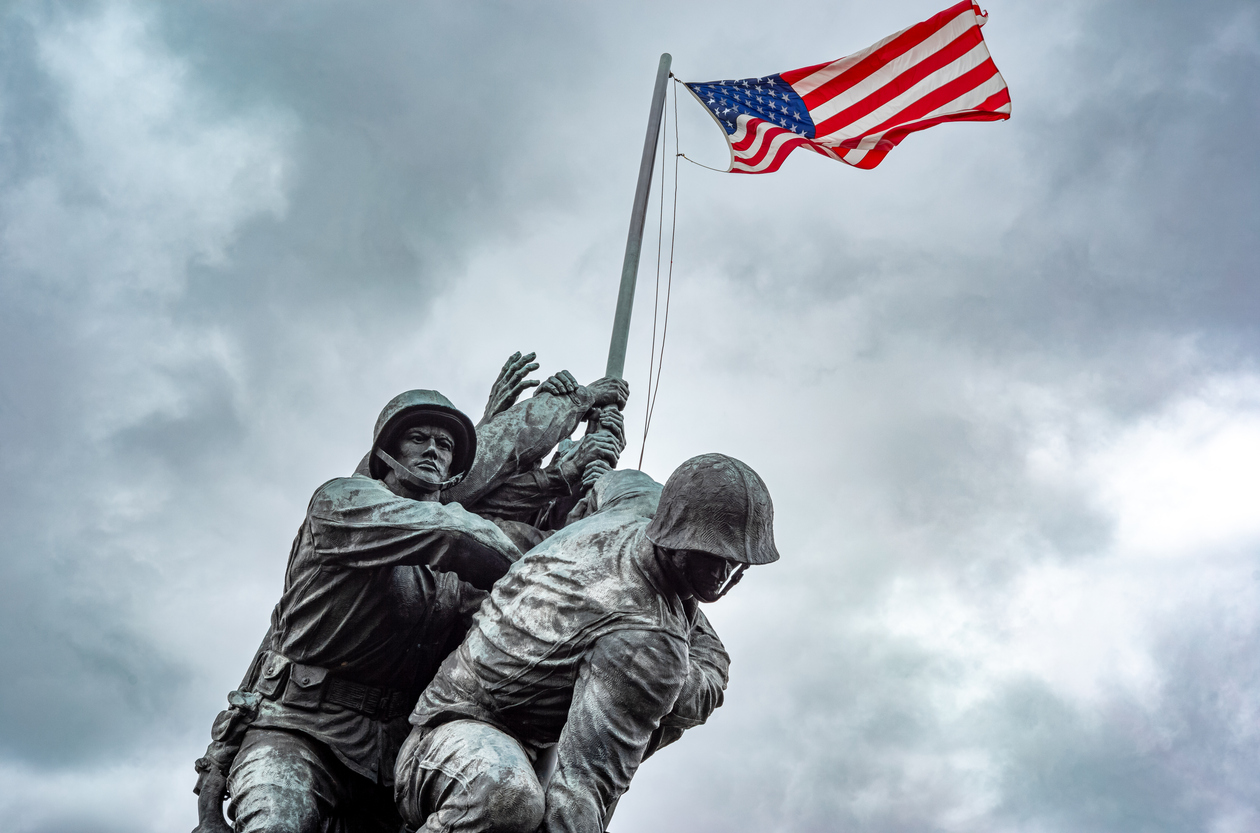
And of the men themselves, as they arrived:’
“And the wounded! Blasted, twisted, torn, mangled, crushed flesh with the dirty faces and puzzled eyes of little boys with the chalky pallor of exsanguination, the ashy moist pallor of shock, the deep red faced stertor of coma, the wild scared, hysterical expressions of the ‘combat fatigues’ and as they piled into our wards, the stretchers placed on the floor, the corpsmen leaning over cutting the clothes from them, dirty, caked clothes…”
And of those who did not survive — the ones carried off in the other direction:
“Back on the deck now – they are bringing off those who will be taken to the little cemetery halfway up the hill – wrapped in sheets, tied in snug, form fitting bundles. Everyone stands at attention until they are loaded into the last few ambulances.”
These passages are hard to read. But the parts of Uncle Charlie’s letters that stayed with me most are not the descriptions of physical horror. They are the descriptions of what the war was doing to his mind and his spirit.
He writes:
“I am afflicted with thoughts and they churn and clamor constantly. My only relief is sleep and I sleep so very badly. I just wish I could spend one day without my head acting like a noisy merry-go-round. I wish I could leap out of my skin and be a vegetating moron for a while because thoughts alone are a bad diet and lead to annoying deficiencies.”
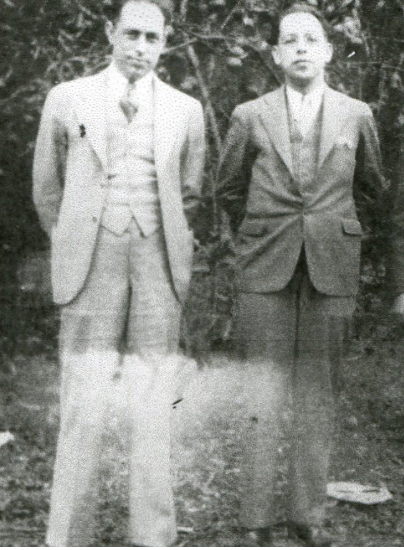
Charles and Harold Tribble
Harold was a Baptist minister (who later became president of Wake Forest University), and it is clear in Charlie’s letters that he was reaching for his brother’s faith for understanding. He writes:
“The ship is ready for its run again and we are just lolling about, resting and waiting and thinking! Yes the thoughts are back, black, ugly, hopeless thoughts for we are seeing man at his worst, and it makes you think. War and peace? Hell, no, the very nature and soul of man – war is but the manifestation of the terrible forces at work inside of us all, and it is but the periodic eruption that must come when we are what we are and when we live as we live. It is the thoughts of those forces, how little we understand them, what little we know of them, what a mystery we still are to ourselves. I wish I had your faith, your hope, your belief.”
That is what we are remembering today. Not an abstraction, or a romantic ideal of patriotism or freedom. Men like Charles Tribble gave years of their lives and pieces of their souls to a war they believed was necessary. They came home changed, many of them, in ways they could not fully explain. They did what was asked of them, and more.
Uncle Charlie made it home and lived a long, fruitful life. But I’m guessing he carried the Pacific with him always — the churning thoughts, the merry-go-round that wouldn’t stop. The least we can do, on one day a year, is to be still enough to hear it.