The Gulf Between Places
A few weeks ago, I stood overlooking Utah and Omaha Beached in Normandy, France, listening to our guide, Johann, share snippets of the stories that thousands of men had left on the sand over eighty years ago. Johann grew up in nearby Bayeux. 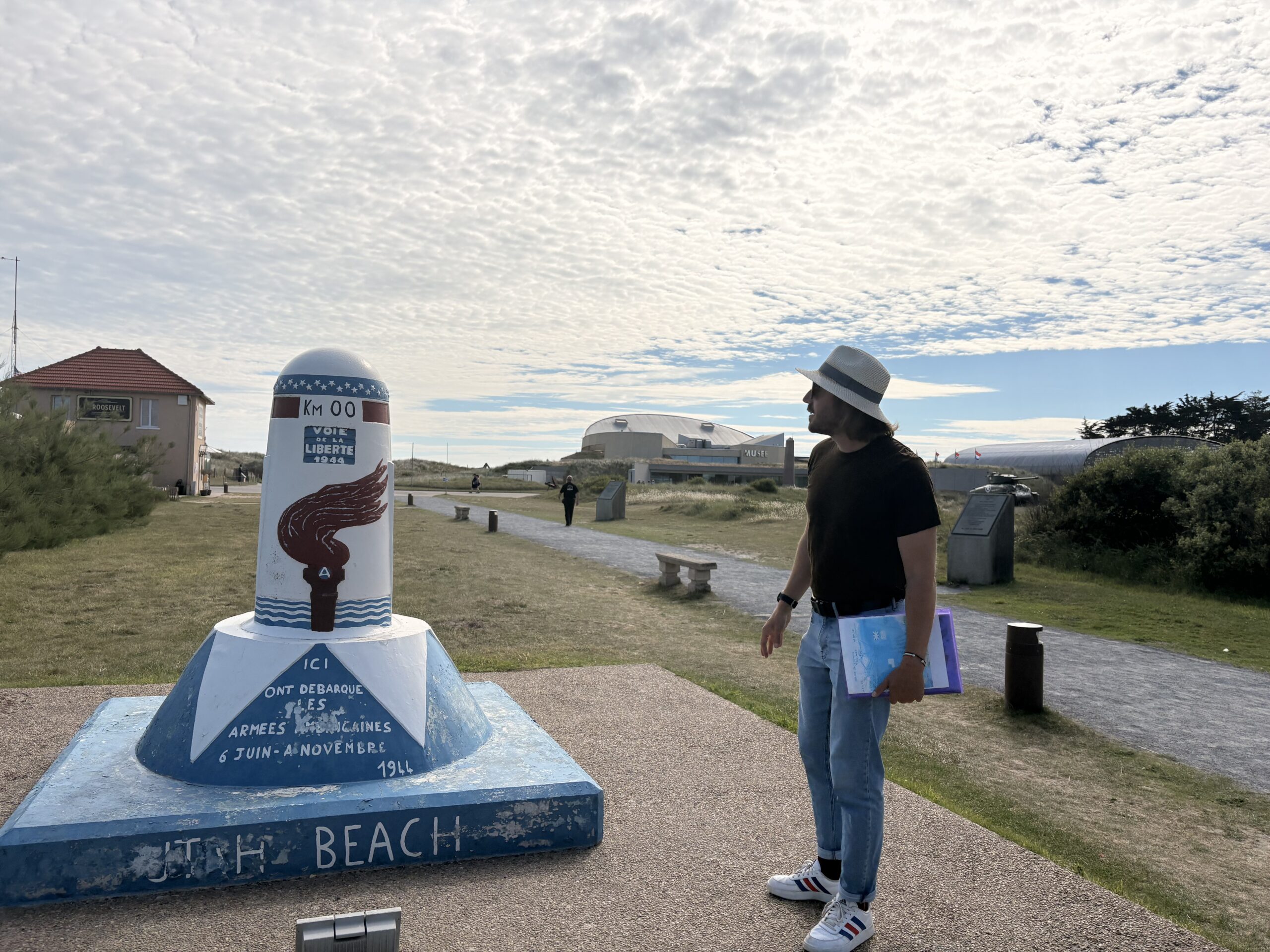 His grandmother and many others in his life witnessed the tragic miracle of D-Day that still permeates the waves and sea air that beat against the edge of France. While Americans are central to the tale, the stories Johann told felt more his than mine.
To United States citizens who weren’t alive to witness it, World War II seems distant in time, place, and relevance. In America, we don’t walk daily along ramparts dotted with the remnants of German bunkers. We don’t hear the echoes of fog-compromised B-17s dropping bombs too far inland, behind their intended marks.
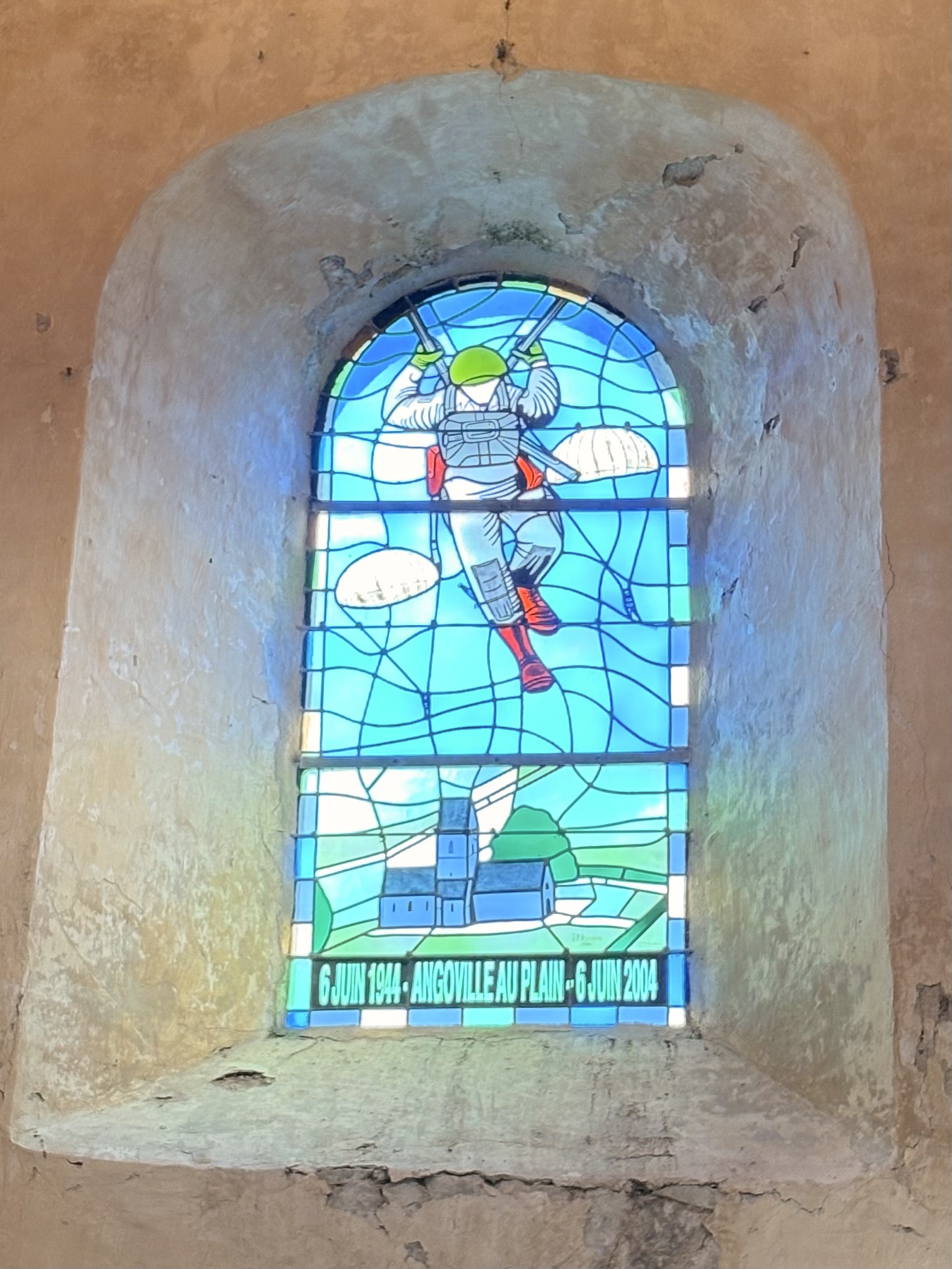
We don’t gaze at the stained-glass church windows that depict American paratroopers who dropped from the sky to reclaim the people’s freedom so many years ago. We don’t place flowers at the photographs of the young American medic who saved the life of a village girl that still sits on the church altar today.
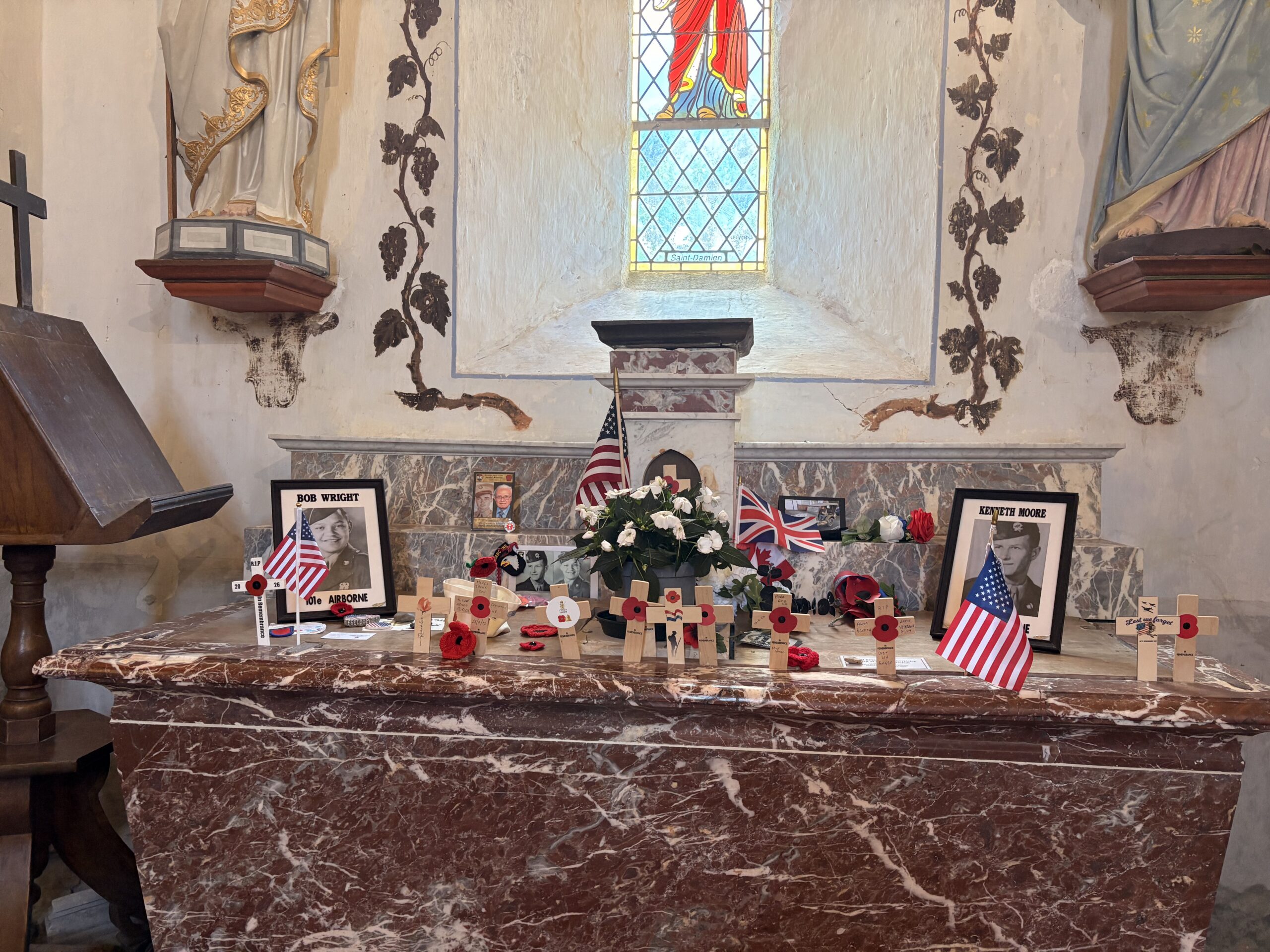
That day on the beaches and in the small American-liberated villages we visited, I could still feel the trauma that pounded the earth. I could see the bullet marks on the church walls. I heard the grateful lilt in the voices of the locals whose parents or grandparents had looked up one day to see freedom falling from the sky.
It made me proud and sad at the same time. Proud to be from a country once so committed to democracy and freedom that it would mount the most ambitious campaign those shores could have imagined. Sad that the memories of that battle are so removed that the best we might get is a shrug of recognition from many who flourish in the freedom we fought so hard to win.
That tension found resolution in an unlikely place. A few days after our tour, I drove with friends from Normandy to a beautiful seaside town in Brittany, where my friend Jonathan grew up. We were there to celebrate his marriage to my good friend Katie, a celebration two years in the making. This wasn’t an indulgent “destination wedding” designed to impress posh friends. This was a return to the place of Jonathan’s childhood, where generations of his family have lived and worked. It was a gathering that would transcend borders and languages, a sweet and love-filled celebration that was emblematic of the coming together of cultures that had been under the threat of evil so many years before.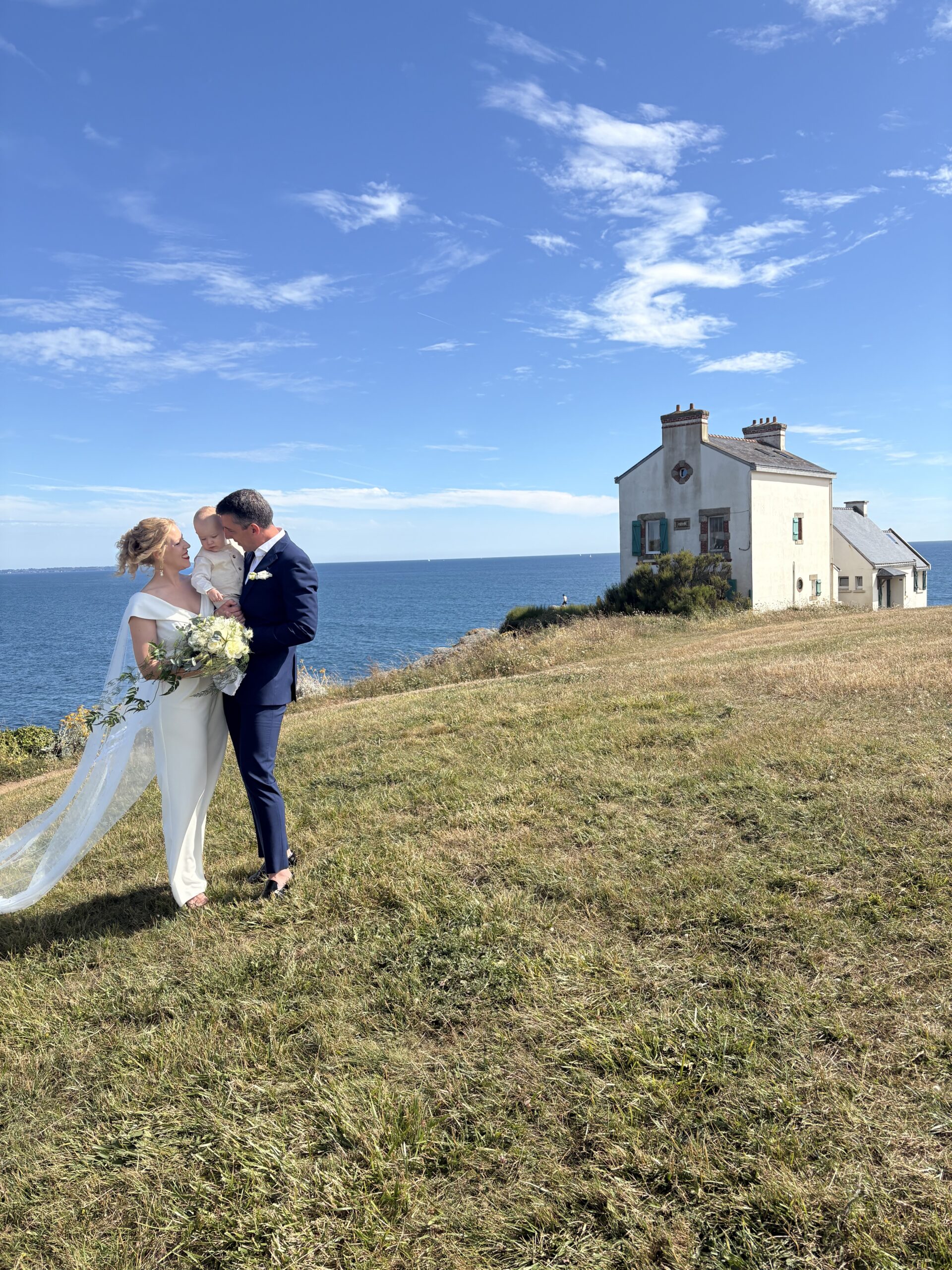
On a cliff overlooking the sea and set against a steel-blue sky, we stood on a grass-covered bluff that covered a concrete fortification. As our friend Tom said as he officiated the service, “This structure beneath us was built during a painful chapter of European history — a bunker constructed in fear, meant for vigilance and defense. We do not ignore that. But today, this place holds something else: open sky, wide sea, and peace. Jonathan and Katie chose this location intentionally — not to glorify the past, but to stand in a place that proves transformation is possible. Time reshapes even concrete. Nature reclaims. And human beings can choose differently.”
To emphasize the point, Tom told the story of Jonathan’s grandfather, André, who, as a boy of 13, stared down a Nazi soldier’s gun, refusing to give up the location of people hiding on his family’s farm. His silence saved lives, and his courage lived on. Andre later worked quietly and humbly to do what he could to end the terrorism that fascism brought to the world.
Trauma. Transformation. Continuity. Love.
A boy’s actions nearly a century ago made that sun-filled day possible, uniting people in love and ideals that transcend time.
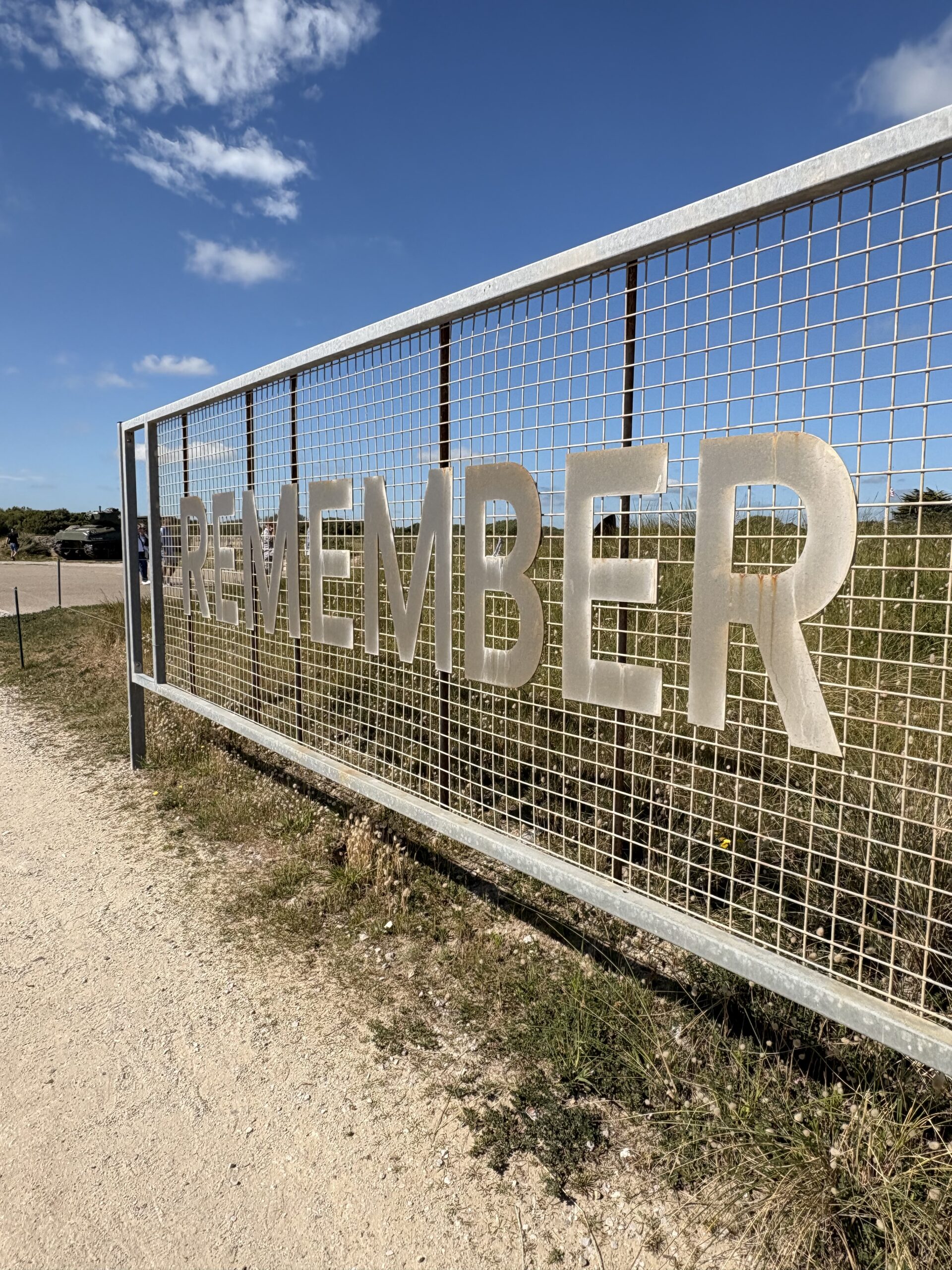
I was in France just after the anniversary of D-Day and just before this country’s 250th birthday celebration. Time yawned uncomfortably between the two. I’ve thought about that bunker, the church altar, and the sea mist in the air, and about the gulf between the place we are and the place we want to be.